One of the major components used in construction and industrial applications are Foundation Bolts. Typically, they are used to secure anchor structures and heavy machinery to concrete foundations.
These are high-strength fasteners which play a major role in ensuring structural stability, absorbing loads, and withstanding vibrations and dynamic forces. Besides, Foundation Bolts are available in various types and are engineered with ‘Precision’ to fulfil certain specific engineering requirements.
We have specifically designed them using premium-grade materials and adhering to international standards. More importantly, we are committed to presenting Foundation Bolts that deliver reliability and high performance and offering customized solutions to meet diverse project requirements.
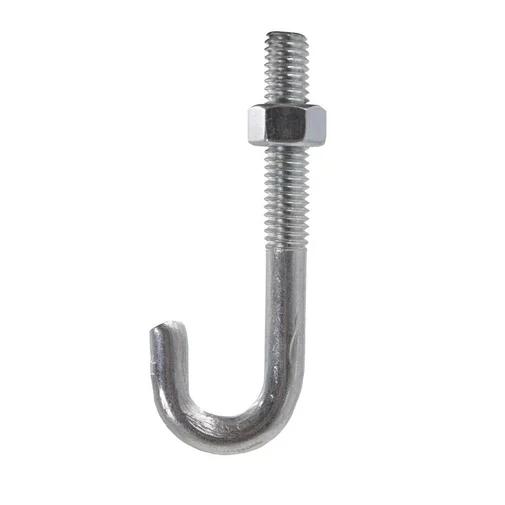
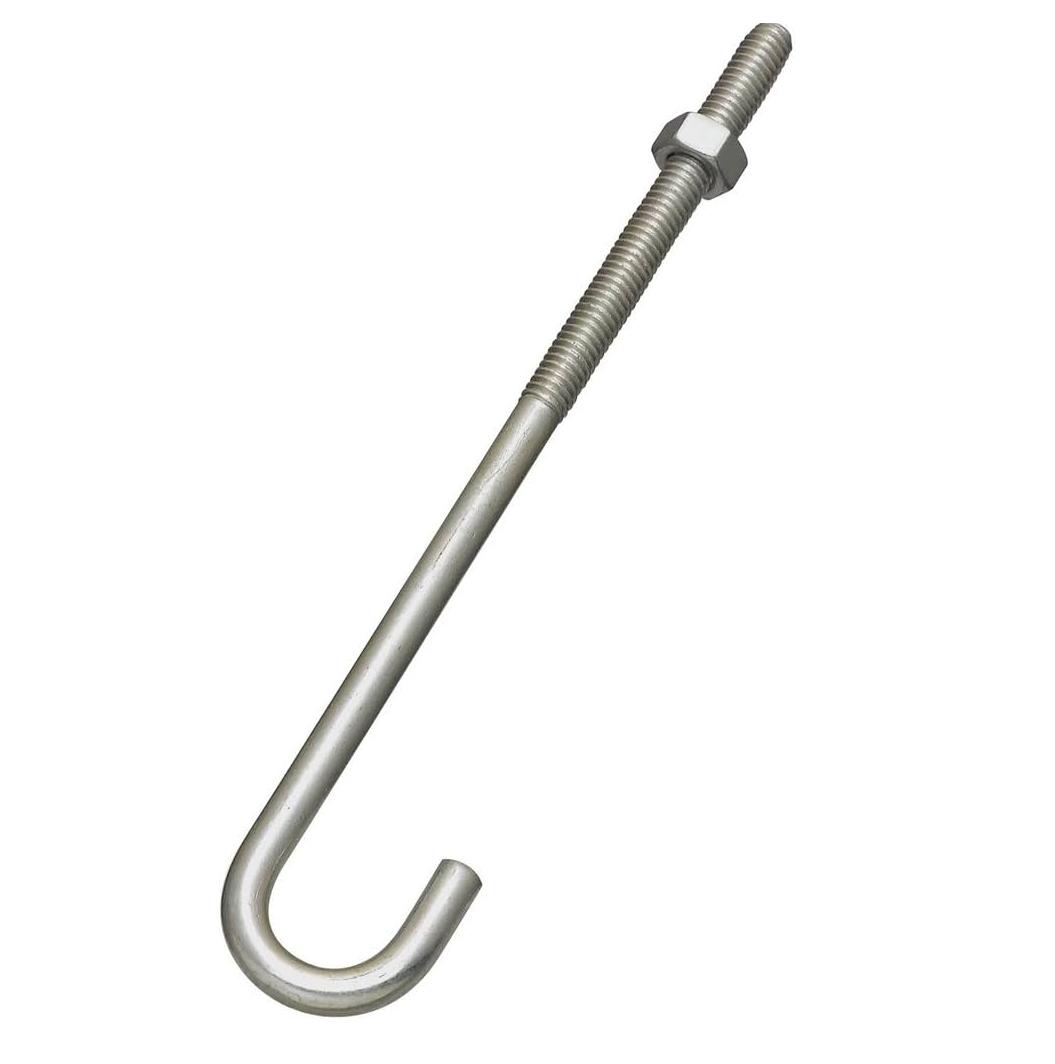
There are different types of Foundation Bolts as per various shapes and configurations. Each of them designed to meet specific structural and installation requirements. They are given below:
Usually, this is one of the types of Foundation Bolts which is bent into a “J” shape at one end. It provides strong anchoring through the hook design.
Typically, shaped like the letter ‘L’. It offers good resistance to pull-out forces.
Foundation Bolts shaped in the form of ‘U’ with threaded ends. It is mainly used for clamping or holding round objects like pipes.
These bolts have an eye loop at one end. They are generally featured as an eye loop at one end
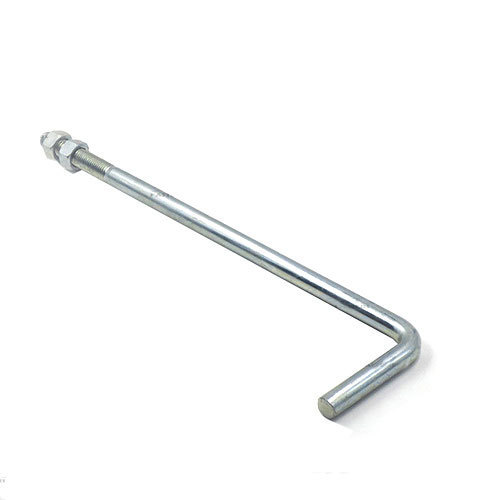
Foundation bolts are an important structural support component that is required to anchor machinery, equipment, and steel structures securely to concrete foundations. Hence they are used in a wide range of industries as applications. They are as follows:
The general information about Foundation Bolts grading are given in the table below:
| Material Grade | Standard | Tensile Strength (MPa) | Yield Strength (MPa) | Hardness (HB) | Typical Application |
|---|---|---|---|---|---|
| Mild Steel (MS) | IS 2062 / ASTM A36 | 400–550 | 250 | ≤ 160 | General-purpose foundations, light structures |
| EN8 / C45 | BS 970 / DIN 17200 | 600–800 | 450 | 200–250 | Machinery mounting, medium-duty supports |
| EN19 / 4140 | BS 970 / ASTM A193 Gr B7 | 850–1000 | 650 | 240–280 | High-stress applications, turbines, heavy equipment |
| SS 304 | ASTM A193 Gr B8 | 515 | 205 | ≤ 200 | Corrosion-resistant use, food & chemical plants |
| SS 316 | ASTM A193 Gr B8M | 580 | 240 | ≤ 200 | Marine, offshore, and chemical environments |
| High Tensile (8.8 Grade) | ISO 898-1 | 800 | 640 | 200–300 | Structural steel work, heavy industrial use |
| High Tensile (10.9 Grade) | ISO 898-1 | 1040 | 940 | 320–370 | High-load foundations, automotive, rail |
| B7 Alloy Steel | ASTM A193 B7 | 860–1030 | 720 | 200–250 | High temperature/pressure service, refineries |
| A36 Steel | ASTM A36 | 400–550 | 250 | ≤ 160 | Low-cost, general industrial and construction use |
The details about TPI Testing & Testing Procedure for Foundation Bolts is given by table below:
| Test Name | Test Method/Standard | Purpose | Conducted By | Remarks |
|---|---|---|---|---|
| Visual Inspection | IS 1367 / ASTM A307 | Check for surface defects, cracks, rust, and thread issues | TPI Inspector / QA | First step before mechanical tests |
| Dimensional Inspection | IS 1363 / ASME B18.2.1 | Verify length, thread pitch, diameter, and bend angle | TPI with calibrated tools | As per approved drawing or spec sheet |
| Material Chemical Composition | ASTM E415 / IS 228 | Confirms material grade using spectrometer or PMI | NABL-accredited lab | MTC (Mill Test Certificate) verification |
| Tensile Strength Test | ASTM E8 / IS 1608 | Evaluate maximum load bolt can bear before failure | Certified Testing Lab | Carried out on sample batch |
| Yield Strength Test | ASTM E8 / IS 1608 | Measure stress at which bolt begins to deform plastically | Certified Lab | Important for high-load applications |
| Hardness Test | ASTM E10 (Brinell) / E18 (Rockwell) | Determine surface hardness of material | TPI / Lab Technician | Required for alloy & high tensile bolts |
| Impact Test (Charpy) | ASTM E23 / IS 1757 | Checks toughness under impact loading | Third-party lab | Conducted at room or sub-zero temperatures |
| Proof Load Test | IS 1367-3 / ISO 898-1 | Confirms the bolt can withstand specified load without permanent deformation | QA / TPI | Used especially for 8.8, 10.9 grades |
| Thread Gauging | GO/NO-GO Gauges (IS 4218) | Ensures correct thread fit and tolerance | TPI Inspector | Done on 100% or sample basis |
| Bend Test (for J / L Type) | IS 1599 / ASTM E290 | Verify bend angle integrity and ductility | QA / Third-party lab | Mandatory for hook-type bolts |
| Galvanizing Thickness Test | ASTM A123 / IS 4759 | Checks zinc coating thickness (if hot-dip galvanized) | Coating Lab / TPI | Ensures corrosion resistance |
| Ultrasonic / MPI / NDT Test | ASTM E1444 / E709 (MPI) | Detect internal or surface cracks | Level II NDT Technician | Optional, used in critical applications |
Copyright © 2025 Pinnacle Engineering & Exporters. All Rights Reserved
